Once again, it’s time for the annual report from the Miller family for 2023, a year of a few significant developments in the family. Christopher, Kristin and Felicity will be spending some time during Christmas week at Thistle Ha’, and other relatives and friends will be visiting as their plans permit.
The news of the year is that we welcomed John’s permanent move from Montréal to the farm at the end of August. This was a difficult decision for John. He left behind his life of over forty years in Montréal, losing personal contact with many friends, former colleagues, students and favourite places. The move itself was no easier. It was painful to downsize his many possessions and books to fit into his new living accommodations at the farm.
The lingering effects of the pandemic meant we did not do any travelling this year, so John missed his trip to the Stratford Festival and his usual visit with Martin and Pam Howley of St. Catharines to attend the Shaw Festival. Nonetheless, members of our extended family from far away continue to drop in for a visit, or connect with us via the website.
Due to Jim’s lingering medical concerns, Jim and Charlotte limited their activities to the farm. Jim underwent successful gallbladder removal surgery in March, and his broken left elbow was found to have finally healed in July, nearly 40 months after its injury. He continues to work on strengthening his left arm muscles.
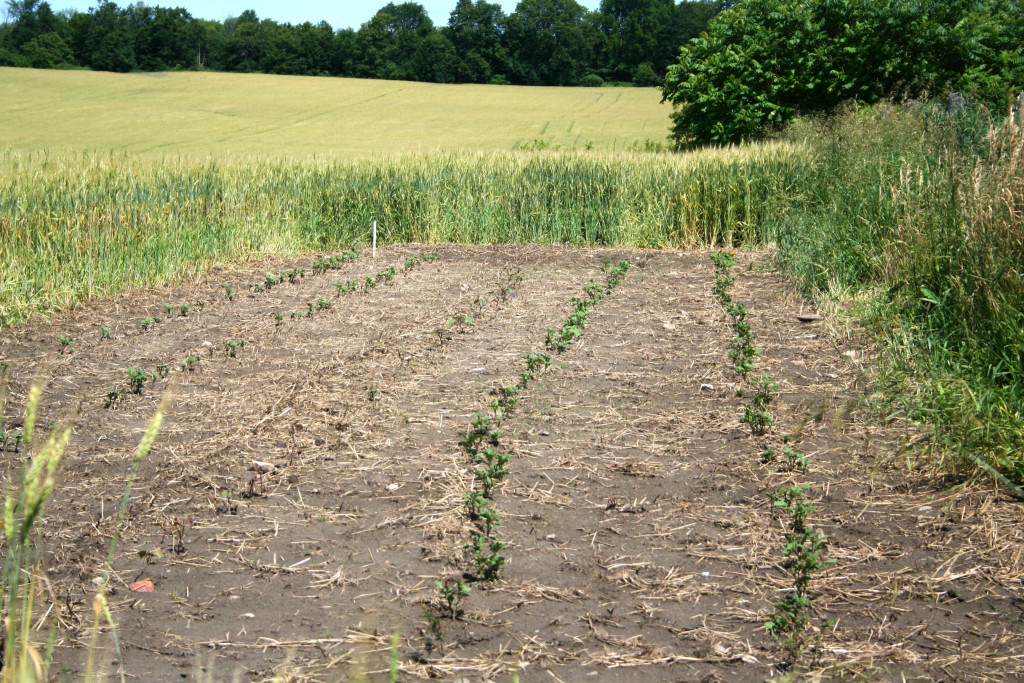
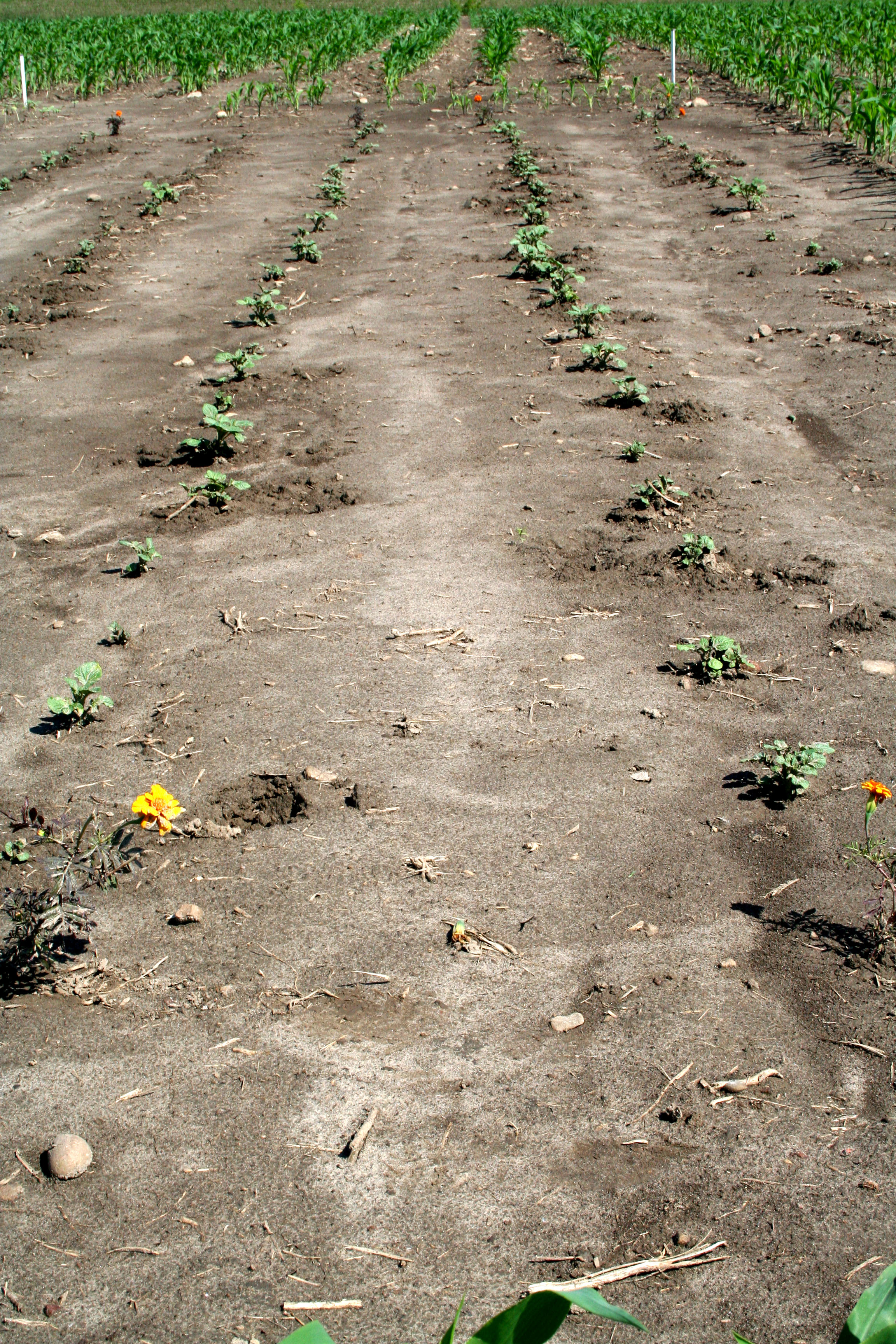
It was a great growing year. Charlotte’s gardens produced bountiful crops of fruits, vegetables and herbs. She spent many days harvesting, processing, canning, preserving, freezing and pickling her produce for use this winter. The amount of apples from her orchard was overwhelming. Many friends came to pick apples. A platoon of off-duty firefighters harvested apples one morning for donation to the local food bank. Cousin Lori Miller organized an apple-picking afternoon involving all nine members of her family in September. Charlotte also donated over 1,000 pounds of apples to the food bank.
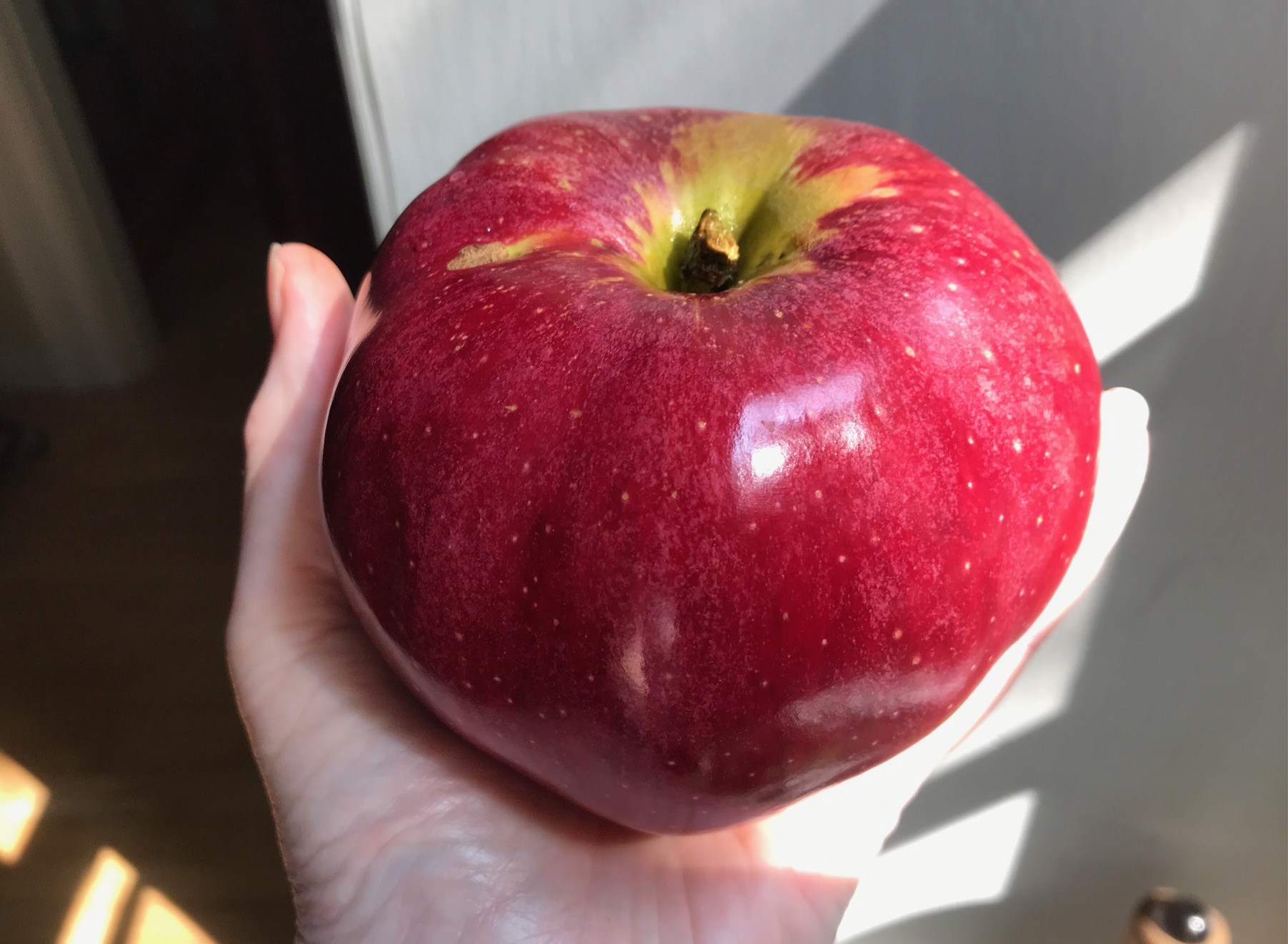 A Wolf River apple from Charlotte's orchard. Only about three are needed to make the world's best apple pie. Photo credit: Thistle Ha'. (Click on photo to enlarge.) |
Kristin, Chris and Felicity were our most frequent visitors throughout the year. Felicity has just turned two, full of boundless energy, ready to take on the world. She is an inherently cheerful child — as her father says, “Every time she wakes up, she brings her A-game.” Charlotte is all smiles every time Felicity visits, especially when Felicity devours Grandma’s endless supply of applesauce.
Work on the house continues. Stonemason Leigh returned to continue replacing the tuck-pointing on the exterior stone wall. Brick mason Bill and his son Dhru completely rebuilt the brick chimneys to make them structurally sound for another 100 – 150 years. We expect completion of the exterior painting next spring. Jim managed to upgrade some millwork in the bedrooms.
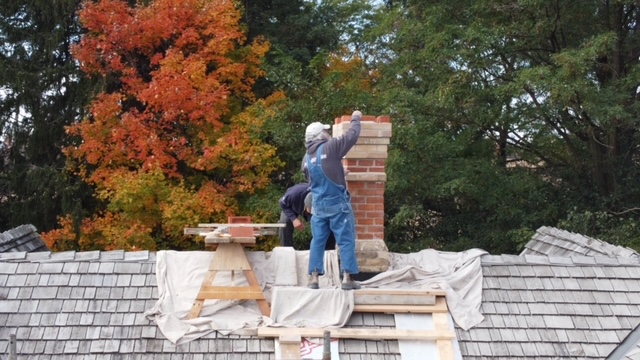 Mason Bill and his son Dhru rebuild a Thistle Ha' farmhouse chimney. Photo credit: Thistle Ha'. |
The other major infrastructure change this year was the installation of Starlink by Chris, Jim and helpers. This rural satellite internet service replaced our patchwork of cellular internet services and provides much faster speeds capable of streaming video, without a data cap, and at a lower cost. Starlink enabled Kristin to work remotely, including video conferencing, during her farm visits. John has also been able to continue to meet virtually with his weekly book group colleagues in Montréal.
The Millers send warmest Christmas greetings and very best wishes for health and happiness in 2024.
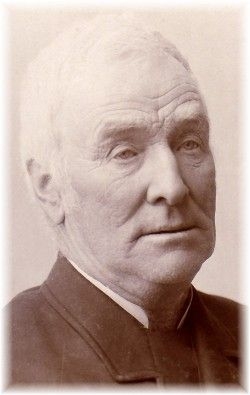 John Miller (pictured) and his descendants had a tremendous influence on the purebred livestock industry in Canada and the United States in the 19th and early 20th centuries. The Millers were renowned innovators, importers, breeders, exhibitors, judges and promoters of Shorthorn cattle, Clydesdale horses, Berkshire and Yorkshire pigs, and Shropshire, Leicester and Cotswold sheep.